
Flooded Basement Cleanup in West Chester, PA
Flooded basement cleanup — before & after
Slide to see standing water and damaged finishes versus the same space after extraction, drying and repair.
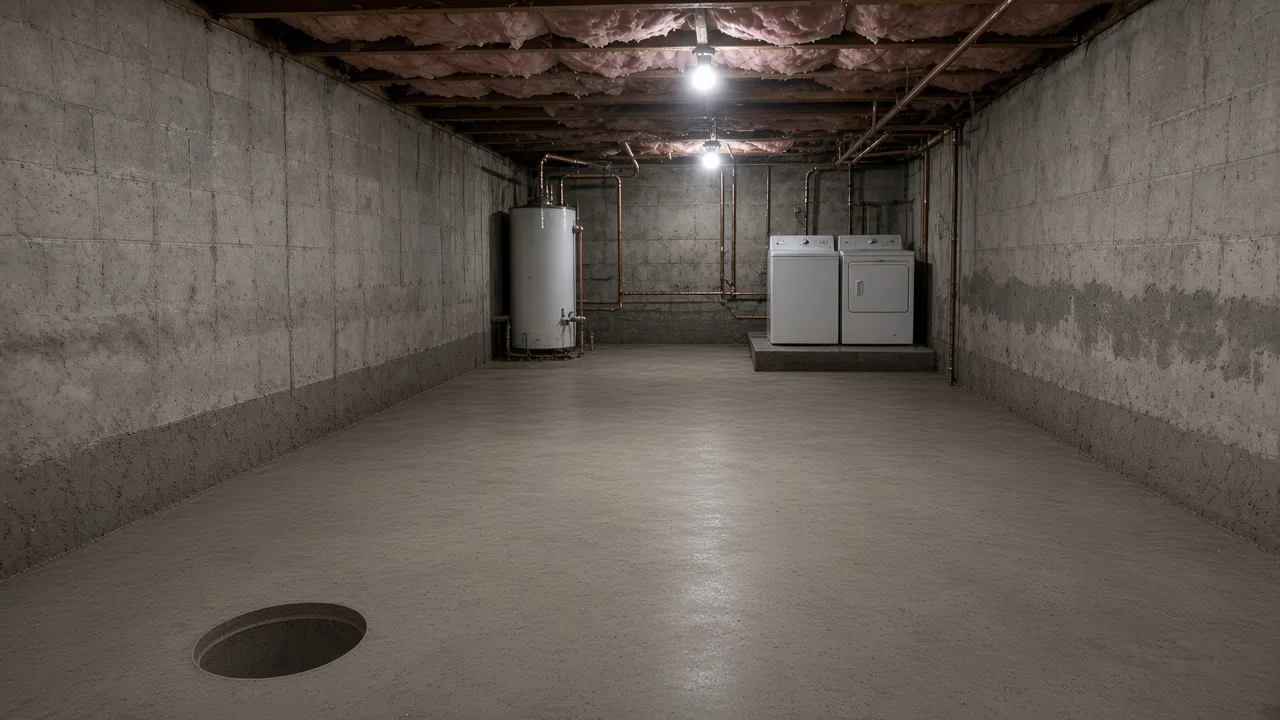
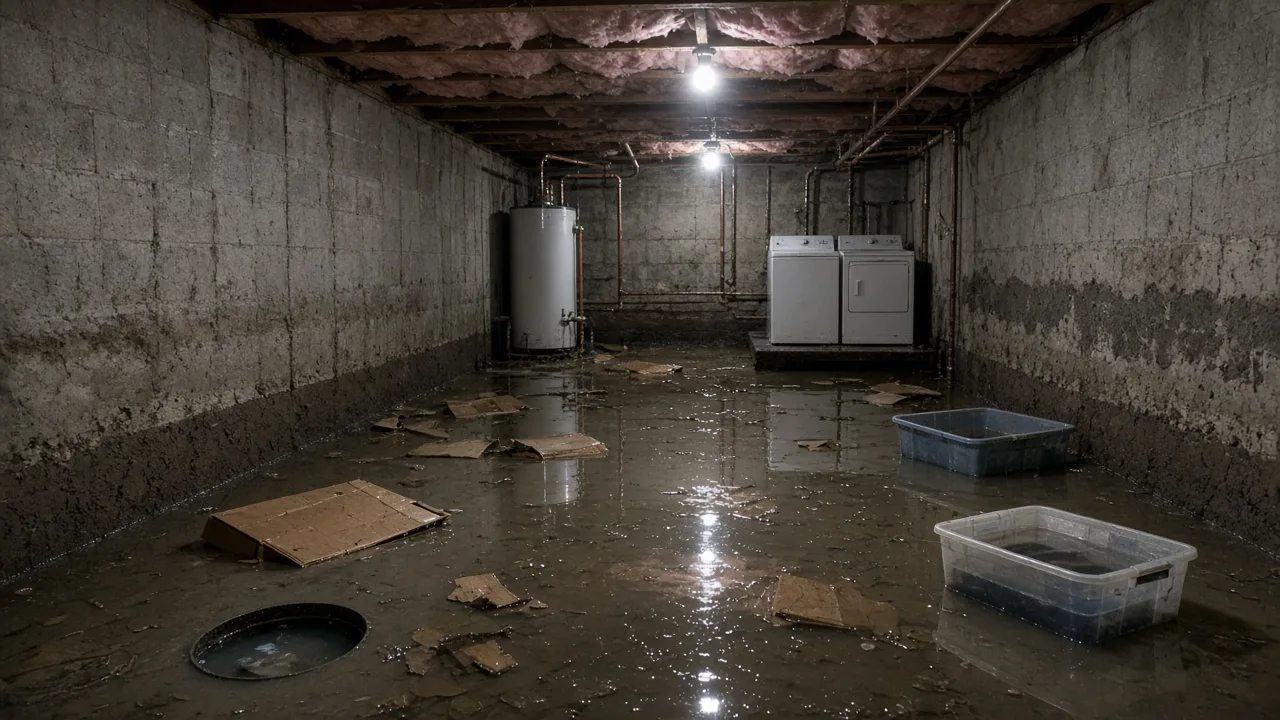 Before After
Flooded basement cleanup means pumping out the water, removing wet carpet, pad and drywall, drying concrete or stone walls with dehumidifiers, and checking for mold before you refinish. Most basements in the West Chester area cost about $750-$4,000 to clean up and dry, and take 3-5 days once water is out.
(555) 000-0000 (Name · Phone · ZIP)
Why basements flood around West Chester
Basements are the low point of every house, so every water problem eventually ends up there. In central Chester County there are a few repeat causes:
- Sump pump failure. Pumps burn out, floats stick, and power goes out during the same thunderstorms that fill the pit.
- Fieldstone and rubble foundations. Many pre-1900 homes in the borough's historic district sit on stone foundations laid with lime mortar. They were never waterproof; in heavy rain, water seeps through the joints and across the floor.
- High spring groundwater. Wet springs raise the water table, pushing water up through floor cracks and the joint between slab and wall.
- Stormwater surcharge. When Goose Creek and street drains overflow — as on the borough's east side in May 2025 — water can enter through window wells and doors.
- Burst pipes and water heaters. Most water heaters live in the basement, and a failed tank releases 40-80 gallons.
- Sewer backup. Floor drains can back up when the municipal line is overloaded. This is Category 3 water and needs flood-style cleanup.
What happens if basement water sits
- Carpet pad and drywall start growing mold within 24-48 hours (EPA guidance)
- Musty odor spreads to the whole house through the HVAC return
- Stored boxes, furniture and documents wick water and are lost
- Wood stair stringers, sill plates and the bottom plates of framed walls soften
- Efflorescence (white salt crust) and spalling on concrete and stone get worse each cycle
- Humidity in an unconditioned basement can stay high enough to cause mold on its own for weeks
What we do in a flooded basement
- Make it safe and stop the source. We confirm the panel or basement circuits are off, identify where water is coming from (pipe, sump, seepage, drain) and stop or redirect it. Output: source identified, photos of water level.
- Pump out and extract. Submersible pumps handle standing water; extractors pull water from carpet and the slab. Output: no standing water.
- Remove what can't be saved. Wet pad is almost always removed. Drywall and insulation are cut above the wet line if readings show they won't dry in place. Contents are moved and listed. Output: removal list with photos.
- Dry and dehumidify. Air movers plus commercial dehumidifiers dry the slab, walls and framing. Stone foundations get extra dehumidification time rather than aggressive heat, which can harm old lime mortar. Output: daily moisture logs.
- Clean, check and plan prevention. Surfaces are cleaned and treated, final readings confirm dry standard, and we point out what caused the flood — a failed pump, a missing check valve, a downspout dumping at the foundation. Output: clearance readings and prevention notes.
Finished vs. unfinished basements
| Unfinished | Finished | |
|---|---|---|
| Typical work | Pump-out, wash, dehumidify | Pump-out, carpet/pad removal, flood cut, framing dry |
| Drying time | 2-4 days | 3-5+ days |
| Typical cost | Lower end of $750-$4,000 | Upper end, plus rebuild |
| Rebuild needed | Rarely | Drywall, trim, flooring — see repair & rebuild |
Basement cleanup cost
Basement water removal and drying typically runs $750-$4,000 in our area, using estimates from national cost guides. A wet unfinished basement caught early sits at the low end; a finished family room with carpet, drywall and a bathroom sits at the high end. Sewage backups and rebuild are priced separately. See the full cost guide.
When to call, and when to wait
Call now if there's more than a puddle, if carpet is soaked, if water is near the electrical panel, furnace or water heater, or if the water came from a floor drain or toilet.
You may be able to handle it if a small amount of seepage touched only bare concrete. Squeegee it to the drain, run a dehumidifier set to 45-50% relative humidity, and watch for recurrence. Recurring seepage points to a drainage issue that a waterproofing contractor should look at.
Basement prevention checklist
- Test your sump pump each spring by pouring water in the pit
- Add a battery backup or water-powered backup pump
- Make sure the discharge line has a check valve and drains away from the house
- Extend downspouts at least 6-10 feet from the foundation
- Keep window wells clear and covered
- Raise stored items on shelves; avoid cardboard on the floor
- Ask your insurer about a sump pump / water backup endorsement
FAQs
My sump pump failed. Is that covered by insurance?
Usually only if you have a water backup or sump overflow endorsement. Standard policies often exclude it. Ask your agent; the endorsement is typically inexpensive to add.
Can a fieldstone basement ever be fully dry?
Stone foundations will always pass some moisture. The goal is drying framing, flooring and drywall to standard and keeping humidity controlled long-term, typically with a permanent dehumidifier and good exterior drainage.
Should I pull up the carpet myself?
If it's safe and power is off, pulling wet pad out quickly helps. Keep a piece for the insurance adjuster and photograph everything first.
How do I keep the basement from smelling after it's dry?
Odor means something is still wet or was missed. Confirm readings, remove any remaining wet pad or cardboard, and run a dehumidifier. Persistent odor is a reason for mold testing.
Is it safe to go into a flooded basement?
Not if the water is near outlets, the panel or appliances and the power is on. Shut off power at the main breaker from a dry location, or call the utility.
Can you save my finished basement walls?
Sometimes. If water was clean and caught within a day, drywall can often be dried in place with small vent holes. Contaminated or long-standing water means a flood cut.
How do I know if the water is coming from outside or from a pipe?
Look at the pattern. Water appearing at the base of walls or around the sump during rain points to groundwater or surface water. Water that appears in dry weather, or the water meter dial spinning with every fixture off, points to a plumbing leak. We confirm with moisture mapping.
Can I run the furnace while the basement is wet?
Only if it wasn't touched by water and an HVAC technician hasn't advised otherwise. Running a furnace whose controls or burners were submerged is a fire and carbon monoxide risk.
Related services & areas
- Related: Water removal & structural drying · Mold removal · Flood damage cleanup · Basement cleanup cost
- Areas: West Goshen basement water help · Downingtown · Kennett Square · West Chester borough
Ready to get help?
Standing water in the basement? Call (555) 000-0000 — we'll talk you through shutting things off safely. (555) 000-0000
Get a Free Quote
Name, phone, email, ZIP and city. No CAPTCHA.
Water in your home right now?
Call for help — or get a free quote in 30 seconds.